





95% of retailers use AI. Only 5% see ROI. Read the report →
Diagnostics

Why ROI remains rare

If adoption is nearly universal, why isn’t ROI? AI isn’t failing for lack of ambition. It’s failing because structure, data, and culture haven’t caught up.


AI success depends on structural readiness

As AI becomes embedded into core workflows, integration depth, connected data, and organizational readiness will separate winners from the rest. Without these foundations, AI remains active, but not impactful.

Crucially, it isn’t as simple as just having data. You need to put that data into context. AI only delivers value when it can act on connected signals across customers, products, and performance, rather than isolated inputs.

The State of AI in Retail_3

Scale tests structural readiness

AI adoption accelerates quickly in the early stages, but progress often slows as organizations try to scale it.

As companies grow, complexity increases faster than integration capability. Systems fragment, governance layers expand, and decision cycles slow. As a result, AI maturity rarely progresses in a straight line.

Smaller retailers are often more advanced, supported by simpler operations and faster decision-making. Mid-sized organizations frequently stall in a transitional phase as operational complexity outpaces integration depth. Larger retailers regain momentum only when governance, investment capacity, and cross-functional alignment catch up with their ambitions.

Integrated context in agentic AI for retail

Data breadth sets the ceiling

AI is only as good as the data feeding it. If complexity explains why progress slows, data explains why it stalls.

As AI capabilities advance, features will quickly become standard. Interfaces and generative tools will be widely available – and easy to replicate. What competitors cannot copy overnight is the integration of customer, product, and commercial data.

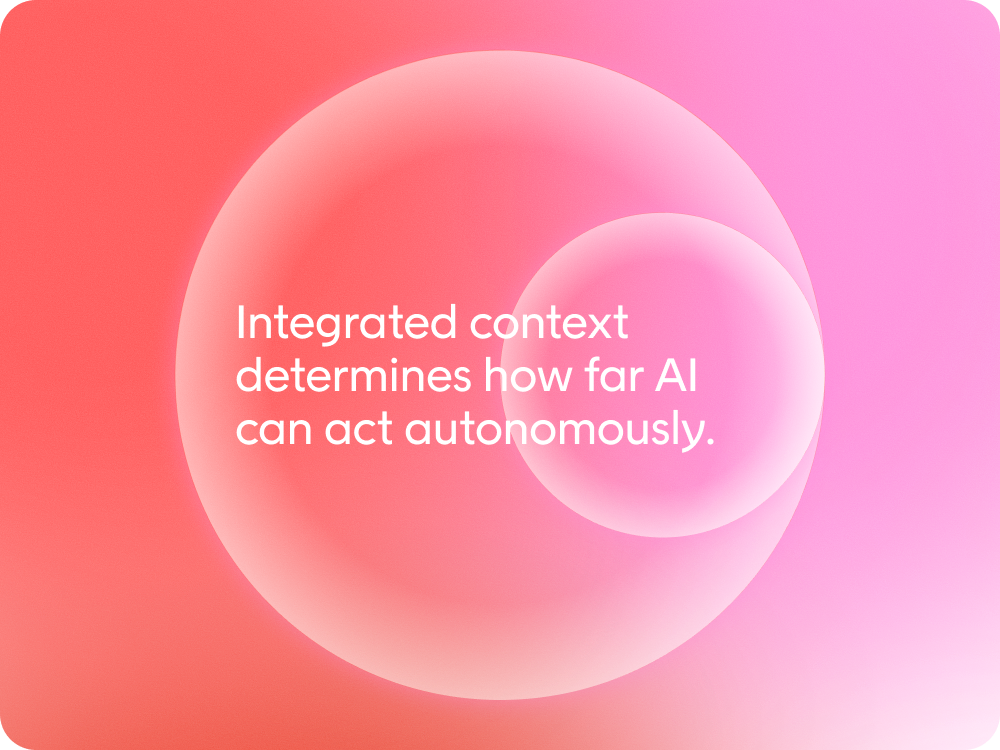
That integrated context determines how far AI can act autonomously, and how confidently it can optimize decisions across the business. This is where long-term advantage is built.

Personalization_Lens_AI_Maturity_in_Retail

Personalization as a lens on AI maturity

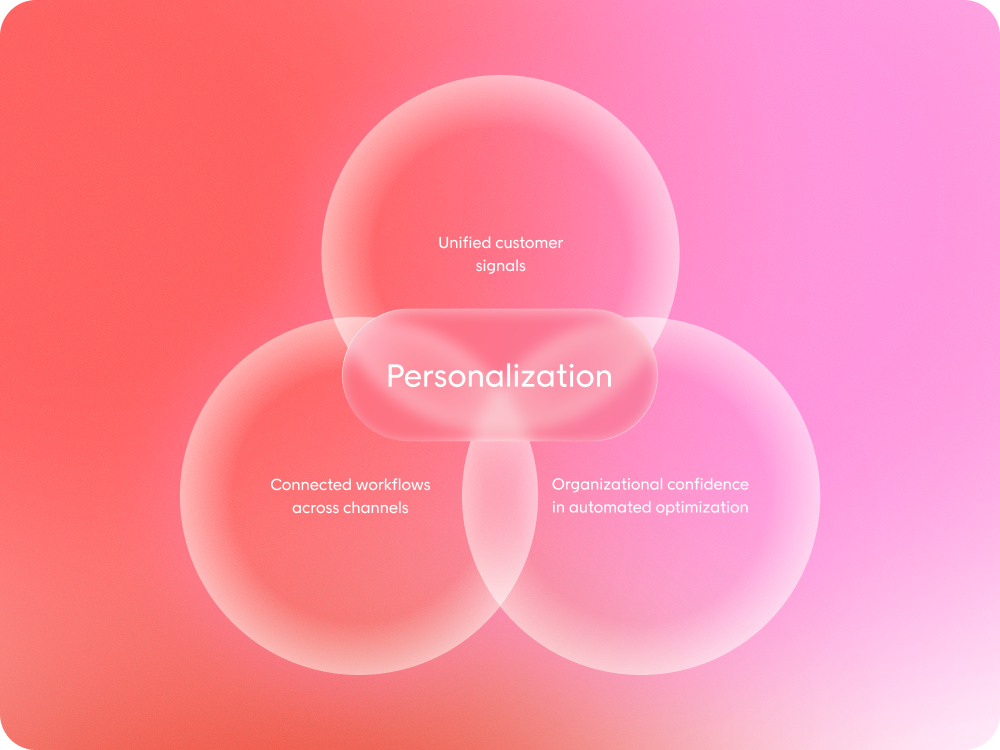
One of the clearest ways to observe differences in AI integration depth for marketing and e-commerce is through personalization capability. Because personalization depends on unified data, connected workflows and confidence in automation, it provides a useful lens through which to assess AI maturity.

The five stages of AI-driven personalization

To gauge where retailers stand, Retail Economics and Voyado
developed a five-stage model of AI-driven personalization,
mapping progression from basic segmentation to continuous,
autonomous optimization.

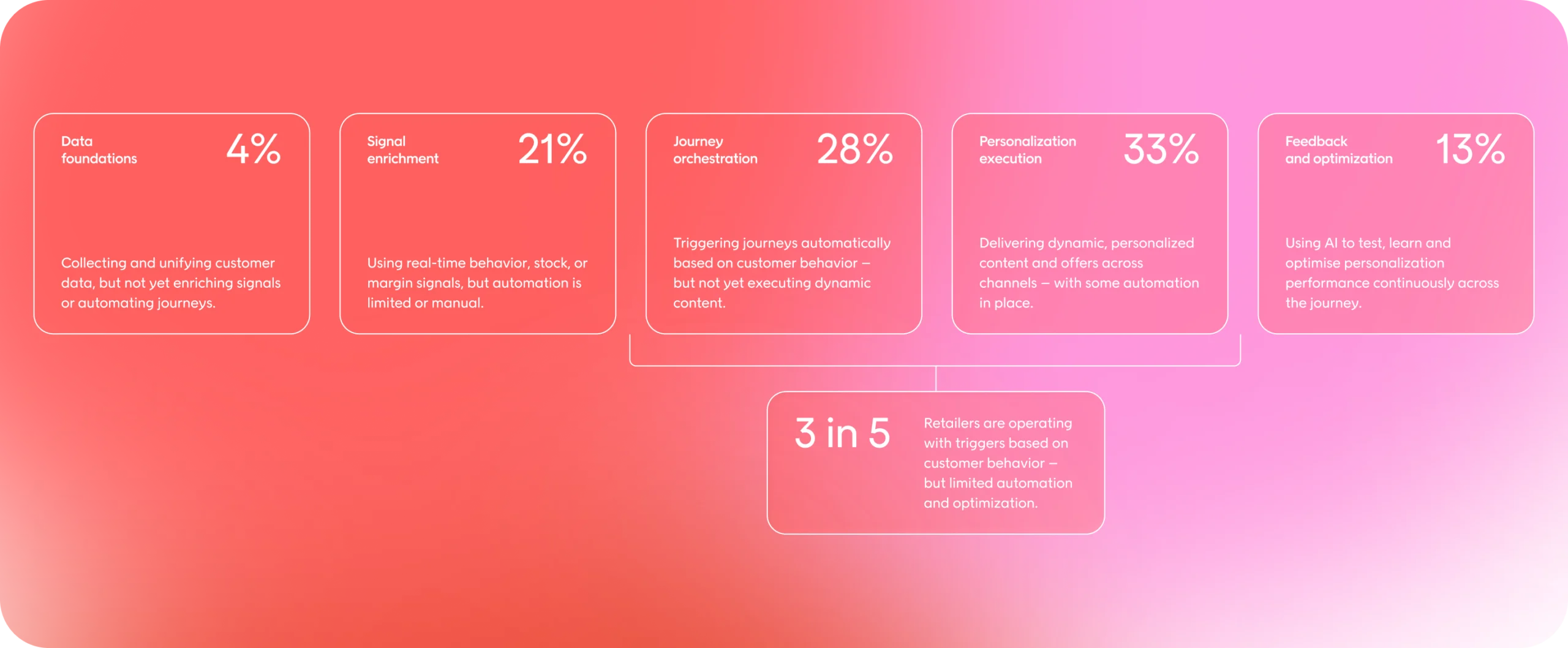
The five stages of AI-driven personalization

13% retailers using embedded, self-optimizing AI

Most retailers remain stuck in the middle stages of AI maturity

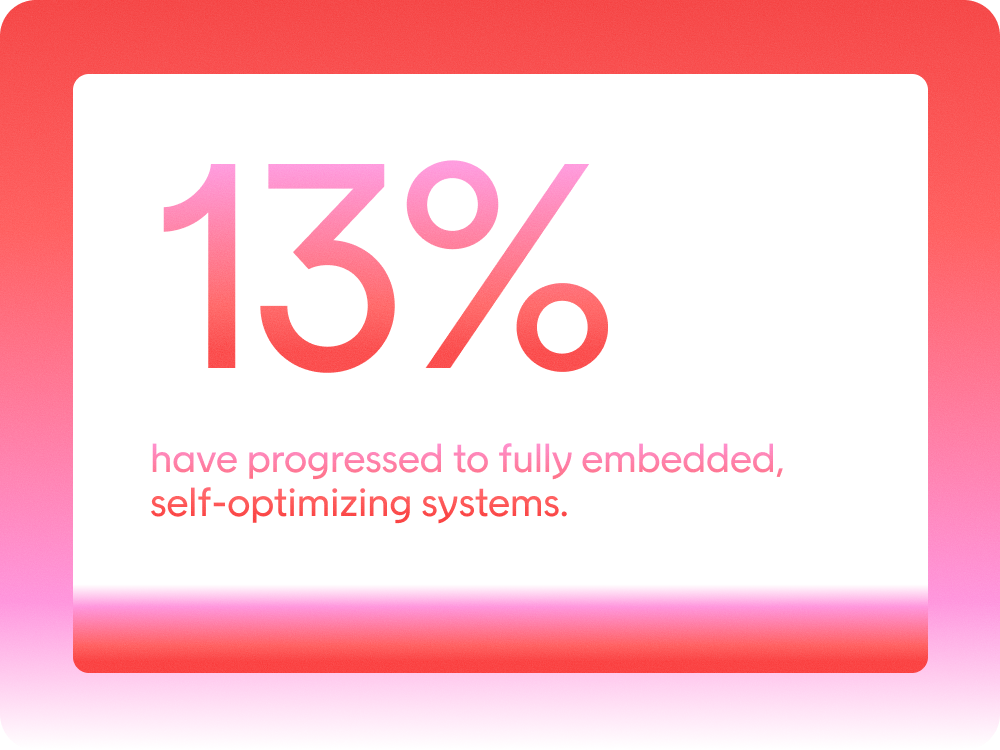
Most retailers place themselves in the middle stages (3 and 4), delivering dynamic experiences but without full automation. Just 13% report reaching the final stage.

These tend to be e-commerce-led or online-first organizations, reflecting stronger data foundations and greater confidence in AI-led decision-making. This mirrors the broader maturity gap identified earlier: experimentation and operational use are common, but fully embedded, autonomous optimization remains rare.

Only the most advanced retailers are using AI in a way that continuously learns and improves. Earlier-stage retailers may deploy AI, but without feedback loops, results tend to be one-off rather than compounding over time.

Culture and organizational readiness limit scale

Technology is rarely the only limiting factor. Progress also depends on operational readiness, with AI only able to scale when it is trusted, governed, and embedded into how teams work.

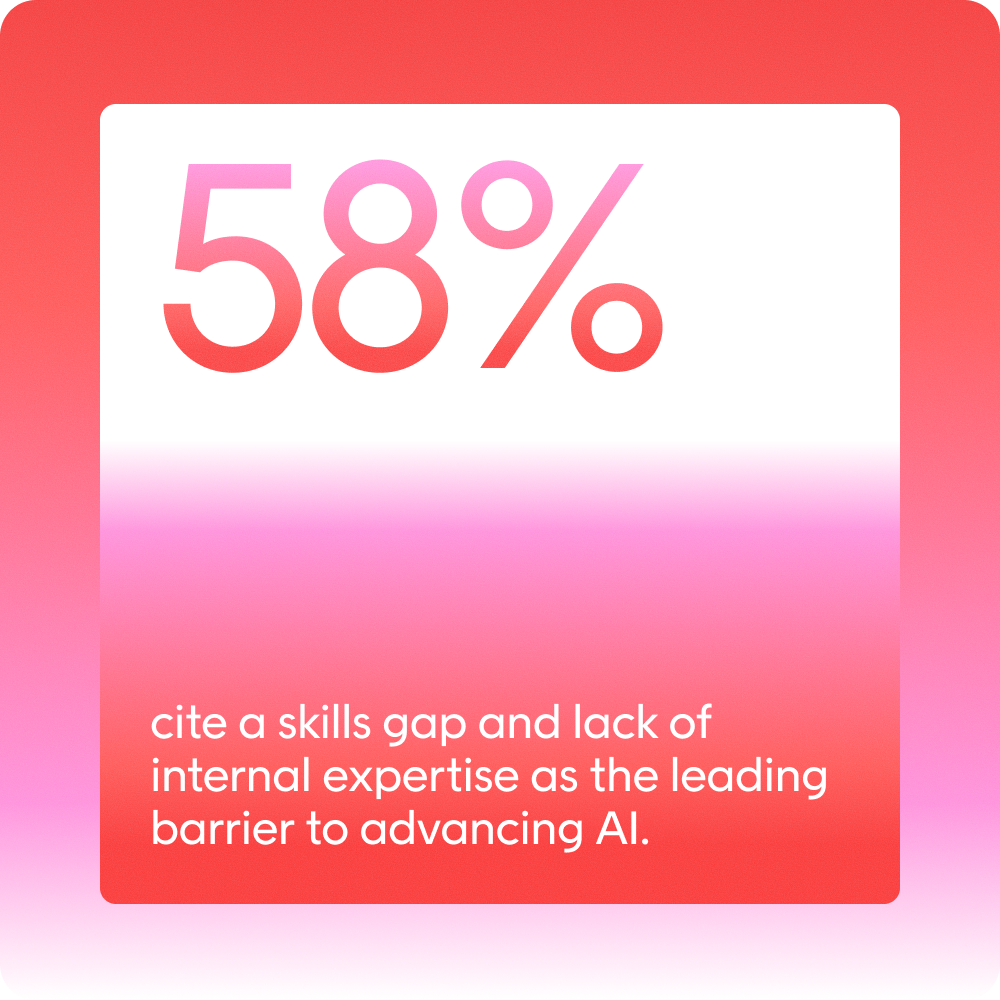
58% of retailers cite a lack of internal skills as the primary barrier to advancing AI. Even as experimentation spreads, capability gaps continue to slow progress beyond early adoption.

Most retailers have access to advanced AI tools through platforms or vendors, but far fewer have the in-house expertise required to deploy, govern, and optimize them at scale.

This often leads to dependence on external vendors, limited ability to refine models, and uncertainty about how to measure AI-driven performance, leaving experimentation fragmented rather than embedded.

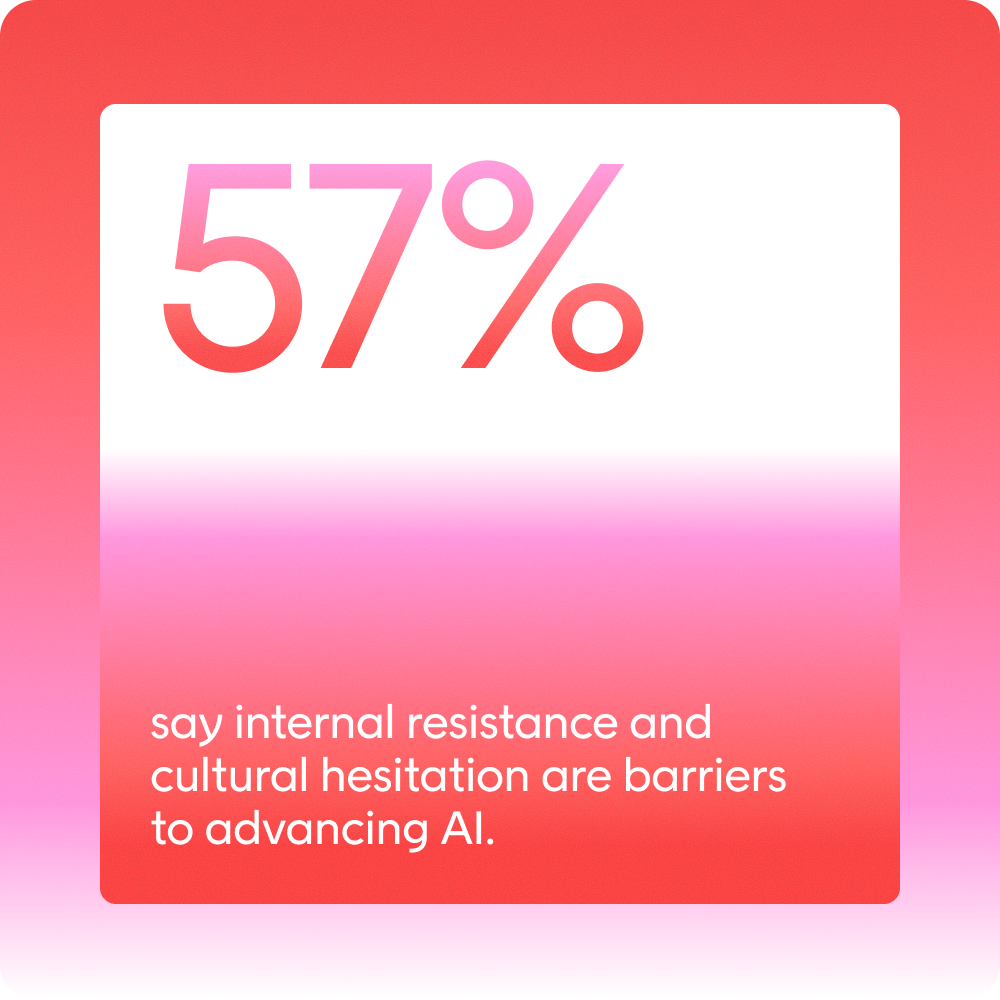
Internal resistance and cultural hesitation_agentic AI for retail

For some, AI represents a move from campaign-led execution to automated, data-driven decision-making. That shift can trigger an ‘immune response’, where teams resist change or feel they’re losing control over outcomes.

In practice, this can show up as hesitation to rely on automated decisions, reluctance to hand over budget or targeting control, and uncertainty about how roles evolve as AI takes on more responsibility.

Without clear ownership, trust in outputs, and alignment on decision-making, progress can stall before systems are fully embedded.

legal, compliance and data privacy concerns with agentic AI for retail

Legal, compliance, and data privacy remain live concerns as AI moves closer to autonomous decision-making.

Questions around ownership, accountability, and brand risk become more pressing: who is responsible for AI-driven outcomes, what happens when automation gets it wrong, and where human oversight should sit.

Without clear governance frameworks to answer these questions, many organizations default to caution, which can limit how far automation can scale.

The maturity gap quote

Why the maturity gap persists

Taken together, these constraints explain why AI activity often fails to translate into measurable return. Many retailers are deploying AI tools, but without the structural foundations required to scale them effectively.

Where internal capability is limited, experimentation fails to compound into performance. Where data remains fragmented, optimization stays narrow. And where ownership and governance are unclear, automation remains constrained.

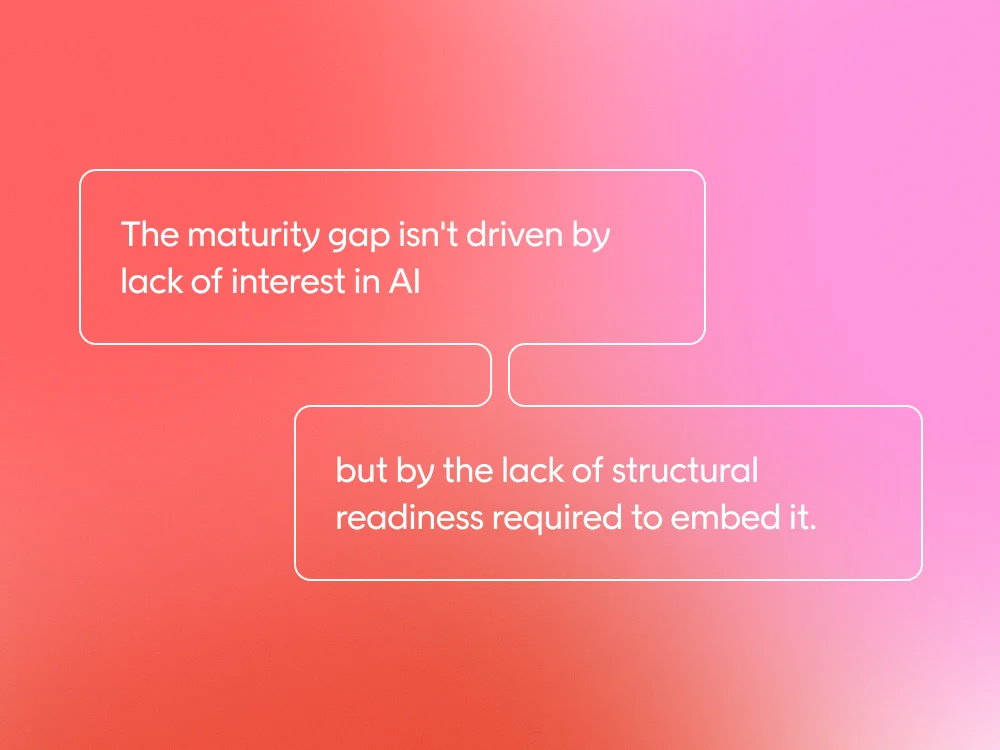
The maturity gap is therefore not driven by lack of interest in AI, but by the lack of structural readiness required to embed it. Understanding what separates the small minority achieving scalable ROI from the rest means looking at how the most advanced organizations are built.

download_report_bg_state of AI in retail download_report_bg_state of AI in retail

Download the full report

Access the full research from Voyado and Retail Economics to discover what separates leaders from the rest.